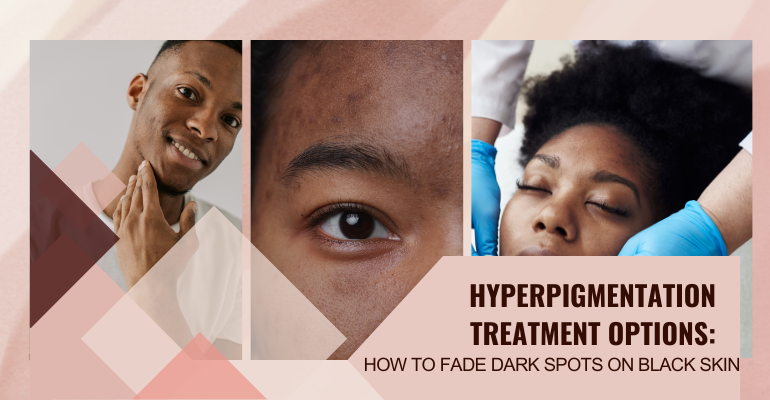

In the past year and a half I have really gotten serious about my skincare, particularly how to fade dark spots aka hyperpigmentation and minimize signs of aging…Yes! You heard me right, those fine lines have been creeping up on me lately, but that is for another day and another article. I want to focus on dark spots and hyperpigmentation in this article. Now, I ALWAYS do a bunch of research before I decide on a course of action, especially when it comes to my face and body.
So I’m here to share some of the knowledge I have gained on this journey with you and at the end of this article I’ll also give you some insight on the treatment that has worked the best for me thus far to minimize my hyperpigmentation.
Do you have dark spots on your face that bother you? You are not alone! And this article is for you! Many black women (and men) struggle with hyperpigmentation, which is the term for uneven skin tone caused by excess melanin production. Melanin is the pigment that gives our skin its color, but sometimes it can go into overdrive and create dark patches on our skin. This can happen due to various factors, such as sun exposure, skin damage, hormonal changes, medication, or genetics(we a more prone to hyperpigmentation, than our white counterparts, due to our skin color).
There are different types of dark spots, such as age spots, acne scars, melasma, freckles, etc. They can vary in size, shape, color, and location. Some are more noticeable than others, and some are easier to treat than others. But the good news is that there are ways to fade dark spots and minimize hyperpigmentation on our black skin, without damaging or lightening your natural skin tone.
In this article, I will share with you everything I’ve learned and what you need to know about how to fade dark spots on black skin. I will talk about the best treatments for hyperpigmentation, covering three main categories of treatments: home remedies, topical products, and medical treatments. I will also give you some prevention tips to keep your skin clear and avoid future hyperpigmentation issues.
By the end of this article, you will be able to make an informed decision about which treatment option is best for you and your skin. So, let’s get started!

Table of Contents
How To Fade Dark Spots Option 1:
Home Remedies
The first category of treatments that I will talk about is home remedies. Home remedies are natural or DIY solutions that you can try at home to treat dark spots on your black skin. They usually involve using ingredients that have bleaching, anti-inflammatory, or antioxidant properties, such as lemon juice, aloe vera, apple cider vinegar, green tea, etc.
Home remedies can be beneficial for dark spots on black skin, because they are cheap, easy, and gentle. You can use them as often as you want, without worrying about harsh chemicals or side effects. You can also customize them according to your skin type and preference.
However, home remedies also have some drawbacks for dark spots on black skin. They may not be very effective or fast, especially for deep or stubborn dark spots. They may also cause irritation, sensitivity, or photosensitivity, if you use them too often or in high concentrations. They may also interfere with other treatments or products that you are using.
Therefore, you should be careful when using home remedies for dark spots on black skin. You should always do a patch test before applying them to your face, and dilute them with water or other ingredients. You should also avoid sun exposure and use sunscreen when using these remedies, as they can make your skin more prone to sun damage.
Some Examples of Home Remedies for Dark Spots on Black Skin
Here are some examples of home remedies that you can try for dark spots and hyperpigmentation for black skin:
Lemon Juice
- Lemon juice is a natural source of vitamin C, which can brighten your skin and reduce the appearance of dark spots. It can also exfoliate your skin and remove the dead skin cells that contain the pigment. To use this remedy, squeeze the juice of a fresh lemon and apply it to the dark spots with a cotton ball. Leave it on for 10 to 15 minutes, then rinse it off with water. Repeat this once or twice a day until you see results.
Aloe Vera
- Aloe vera is a plant that has soothing, healing, and moisturizing properties. It can also help fade dark spots by inhibiting the enzyme that produces melanin. To use this remedy, cut a fresh aloe vera leaf and scoop out the gel. Apply the gel to the dark spots and massage gently. Leave it on for 20 to 30 minutes, then rinse it off with water. Repeat this once or twice a day until you see results.
Apple Cider Vinegar
- Apple cider vinegar is a fermented product that contains acetic acid, which can lighten your skin and fade dark spots. It can also balance your skin’s pH level and prevent bacterial infections. To use this remedy, mix equal parts of apple cider vinegar and water in a bowl. Apply the solution to the dark spots with a cotton ball. Leave it on for 15 to 20 minutes, then rinse it off with water. Repeat this once or twice a day until you see results.
Green Tea
- Green tea is a beverage that has antioxidant, anti-inflammatory, and anti-microbial effects. It can also help reduce the production of melanin and fade dark spots. To use this remedy, steep a green tea bag in hot water for three to five minutes. Remove the tea bag and let it cool down. Squeeze out the excess liquid and apply the tea bag to the dark spots. Leave it on for 10 to 15 minutes, then rinse it off with water. Repeat this once or twice a day until you see results.
These are just some of the home remedies that you can try for your dark spots. You can also experiment with other ingredients, such as honey, turmeric, yogurt, potato, etc. However, home remedies are not the most effective method for removing dark spots. You should always do your research and be cautious when using these remedies, as they may not work for everyone or for every type of dark spot.
How To Fade Dark Spots Option 2:
Topical Products
The second category of treatments that I will talk about is topical products. Topical products are products that you apply to your skin to lighten or fade the pigmentation. They usually contain ingredients that can inhibit melanin production, break down existing pigment, or exfoliate the skin. Some of the most common ingredients are vitamin C, retinoids, hydroquinone, kojic acid, and azelaic acid.
Topical products can be beneficial for dark spots on black skin, because they are convenient, accessible, and effective. You can find them in various forms, such as serums, creams, gels, lotions, etc. You can apply them to the affected areas once or twice a day, preferably at night, as some of these ingredients can make your skin more sensitive to the sun. You should also use a sunscreen of at least SPF 30 during the day to protect your skin from further damage.
Some of these products can show results in as little as a week, but some may take longer, depending on the concentration and formulation of the ingredients. They can also improve your skin texture, firmness, and elasticity.
However, topical products also have some drawbacks for dark spots on black skin. They can cause irritation, allergic reactions, or skin lightening, if you use them too much or too long. It’s always a good strategy to start low (this refers to the concentration of the active ingredient) and slow (how frequently you use the product). Topical products can also interact with other products or treatments that you are using, and cause more harm than good. They can also be expensive, depending on the brand and quality of the product.
Therefore, you should be careful when using topical products on dark spots and hyperpigmentation treatment for black skin. You should always read the label and follow the instructions of the product, and consult a dermatologist if you have any skin issues or concerns. You should also do a patch test before using the product, and stop using it if you experience any adverse effects.
Some Examples of Topical Products for Dark Spots on Black Skin
Here are some examples of topical products that you can try for dark spots on black skin, based on the search web tool results:
Vitamin C Serum
- Vitamin C is a powerful antioxidant that can brighten your skin and reduce the appearance of dark spots. It can also boost collagen production and fight free radical damage. You can use a vitamin C serum that contains at least 10% of vitamin C, such as the Mad Hippie Vitamin C Serum or the TruSkin Vitamin C Serum. Apply a few drops to your face after cleansing and before moisturizing.
Retinoid Cream
- Retinoids are derivatives of vitamin A that can exfoliate your skin and stimulate cell renewal. They can also reduce the production of melanin and fade dark spots. You can use a retinoid cream that contains at least 0.5% of retinol, such as the RoC Retinol Correxion Deep Wrinkle Night Cream or the Neutrogena Rapid Wrinkle Repair Night Moisturizer. Apply a thin layer to the affected areas at night, and use sunscreen during the day.

Here’s a few tips when using retinoids (You can find out more about retinoids in this article):
- Retinoids can be very irritating to skin, because of their magnificent ability to increase cell turnover. Therefore, it is advised to start LOW and go SLOW when introducing retinoids into your skincare routine. What I mean by this is: whichever form of retinoid you choose, ensure that you start at the lowest concentration and start by using once per day, then gradually increase the frequency as you continue usage.
- My advise is to start with an over-the-counter retinoid such as retinols or retinals or adapalene (Differin Gel) before you graduate to tretinoin or tazarotene.
- If you have very sensitive skin, retinoids may be very irritating to your skin. But don’t be discouraged, there a very good alternatives if retinoids don’t work for you. Check out my article on Retinoid Alternatives.
Hydroquinone Cream
- Hydroquinone is a synthetic ingredient that can inhibit the enzyme that produces melanin, and thus lighten dark spots. It is one of the most effective and widely used ingredients for hyperpigmentation, but it is also controversial and regulated. You can use over-the-counter (OTC) hydroquinone cream that contains up to 2% of hydroquinone, such as the Admire My Skin Ultra-Potent Brightening Serum or the Murad Rapid Age Spot and Pigment Lightening Serum. You can also receive a prescription for up to 4% of hydroquinone. Here are general directions for hydroquinone use: Apply a thin layer to the affected areas once or twice a day, and use sunscreen during the day. However, make sure to follow the directions of your dermatologist or physician.
Here’s a tip when using hydroquinone:
- You should cycle on and off your hydroquinone usage. It is recommended to use hydroquinone in a 3-4 month cycling method. This means that you should actively use hydroquinone for 3-4 months then switch to another skin lightener (like Kojic acid or Azelaic acid) for 3-4 months before switching back on to hydroquinone again.
- WHY?:
- Ochronosis: Prolonged use of hydroquinone can cause Ochronosis (which is a blue-black discoloration of the skin that is caused by a build up of tyrosine or phenylalanine), which is rare, but most likely to occur on us black folks.
- Rebound Hyperpigmentation: this can occur after going cold turkey(aka stopping) a lightening product or due to sun exposure while on hydroquinone.
- WHY?:
Kojic Acid Cream
- Kojic acid is a natural ingredient that can inhibit the enzyme that produces melanin, and thus lighten dark spots. It can also have anti-inflammatory and antibacterial effects. You can use a kojic acid cream that contains at least 2% of kojic acid, such as the Koji White Kojic Acid & Vitamin C Skin Brightening Soap or the Divine Derriere Skin Lightening 2% Hydroquinone Bleaching Cream with 6% AHA Glycolic Acid and Lactic Acid. Apply a thin layer to the affected areas once or twice a day, and use sunscreen during the day.
Azelaic Acid Gel
- Azelaic acid is another natural ingredient that can reduce the production of melanin and fade dark spots. It can also have anti-inflammatory and anti-microbial effects, and help with acne and rosacea. You can use an azelaic acid gel that contains at least 10% of azelaic acid, such as the The Ordinary Azelaic Acid Suspension 10% or the Paula’s Choice 10% Azelaic Acid Booster. Apply a pea-sized amount to the affected areas once or twice a day, and use sunscreen during the day.
These are just some of the topical products that you can try for dark spots on black skin. You can also experiment with other ingredients, such as niacinamide, arbutin, licorice extract, etc. However, you should always do your research and be cautious when using these products, as they may not work for everyone or for every type of dark spot.
How To Fade Dark Spots Option 3:
Medical Treatments
The third category of treatments that I will talk about is medical treatments. Medical treatments are professional treatments that are performed by dermatologists or licensed professionals in a clinic or spa setting. They involve using various techniques and devices to remove or alter the top layer of your skin, where the pigment is located.
Medical treatments can be beneficial for dark spots on black skin, because they can offer more dramatic and lasting results than home remedies or topical products. They can also treat a larger area of skin and penetrate deeper into the dermis. They can also treat other skin issues, such as wrinkles, scars, and pores.
However, medical treatments also have some drawbacks for dark spots on black skin. They can be more expensive and time-consuming than home remedies or topical products. They can also cause more pain, discomfort, and side effects, such as scarring, infection, and hyperpigmentation. They can also require more preparation and recovery time, and more follow-up sessions.
Therefore, you should be careful when choosing medical treatments for dark spots on black skin. You should consult a dermatologist before undergoing any of these treatments, and find a qualified and reputable provider who can perform them safely and effectively. You should also follow the pre- and post-care instructions carefully and avoid any complications and ensure optimal healing.
Some Examples of Medical Treatments for Dark Spots on Black Skin
Here are some examples of medical treatments that you can try for dark spots on black skin, based on the search web tool results:
Chemical Peels
- Chemical peels are one of the most common and popular treatments for dark spots on black skin. They involve applying a solution of acids, such as glycolic, salicylic, or lactic acid, to your skin. The solution causes your skin to peel off, revealing a new and smoother layer underneath. Chemical peels can help reduce the appearance of dark spots, as well as wrinkles, scars, and pores. They can also improve your skin texture and brightness. You can choose from different levels of chemical peels, depending on the depth and intensity of the treatment. The deeper the peel, the more effective it is, but also the more painful and risky. You may need to repeat the procedure every few weeks or months to maintain your results.
Microdermabrasion
- Microdermabrasion is another treatment that can help with dark spots on black skin. It involves using a handheld device that has tiny crystals or a diamond tip to gently sand away the top layer of your skin. This process removes the dead skin cells and the pigment, as well as stimulates blood flow and collagen production. Microdermabrasion can help lighten dark spots, as well as improve your skin texture, elasticity, and clarity. It is a relatively painless and quick procedure, but you may need several sessions to see noticeable results. You may also experience some redness, swelling, and sensitivity after the treatment.
Laser Therapy
- Laser therapy is a more advanced and expensive treatment that can help with dark spots on black skin. It involves using a device that emits pulses of light energy to target the pigment in your skin. The light energy breaks up the pigment into smaller particles, which are then absorbed by your body or shed off with your skin. Laser therapy can help reduce the appearance of dark spots, as well as stimulate collagen production and improve your skin tone and texture. It can also treat other skin issues, such as wrinkles, scars, and veins. However, laser therapy can also cause some side effects, such as pain, burning, blistering, infection, and hyperpigmentation. You may need several sessions to achieve your desired results, and you may need to avoid sun exposure and use sunscreen for several weeks or months after the treatment.
Not all laser therapy treatments are suitable for black skin and can cause more damage and can worsen hyperpigmentation. Therefore, ensure that you select a provider who is experienced in using lasers to treat black skin. CHECK OUT THIS ARTICLE ON THE DIFFERENT TYPES OF LASER TREATMENTS FOR HYPERPIGMENTATION. Here are a few options to ask your provider about: Gentle YAG Pro-U, PiXel8-RF, and Pico Laser
Microneedling
- Microneedling is a procedure that involves using a device that creates tiny punctures in your skin, which stimulates the skin’s natural healing process and collagen production. This can help fade your dark spots by breaking up the pigment and replacing it with new and healthy skin cells. Microneedling is safe for all skin types and tones, and it does not deliver heat to the skin like lasers do. Therefore, it does not cause hyperpigmentation or scarring as a post-inflammatory response1. You may need several sessions to see noticeable results, and you may experience some redness, swelling, and peeling after the treatment. After treatment it is advised that you also avoid sun exposure and use sunscreen for several weeks after treatment.
Microneedling is a great medical treatment for black skin but it is not for everyone:
- If you have active acne, skin infections, or prone to keloid scarring, you should AVOID micro needling, as it can worsen these conditions.
These are just some of the medical treatments that you can try for dark spots on black skin. You can also explore other options, such as cryotherapy, dermabrasion, or microneedling. However, you should always do your research and consult a dermatologist before trying any of these treatments, as they may not be suitable or safe for everyone or for every type of dark spot.
How To Fade Dark Spots Option 4:
Hyperpigmentation Prevention Tips
The last category of treatments that I will talk about is hyperpigmentation prevention tips. Prevention tips are ways to prevent dark spots on black skin, as they can be harder to treat and more noticeable than on other skin tones. Prevention tips can also help you maintain your results and keep your skin clear and even.
Prevention tips are important for dark spots on black skin, because they can save you time, money, and hassle. They can also protect your skin from further damage and aging. They can also boost your confidence and self-esteem.
Some Examples of Prevention Tips for Dark Spots on Black Skin
Here are some examples of prevention tips that you can follow for dark spots on black skin, based on the search web tool results:
Wear sunscreen
- The most important and effective way to prevent dark spots on black skin is to wear sunscreen every day, regardless of the weather or season. Sun exposure is the main cause of dark spots, as it triggers the production of melanin and damages the skin cells. Sunscreen is able to block the harmful UV rays and prevent sun damage and hyperpigmentation. You should use a sunscreen of at least SPF 30, and reapply it every two hours or as needed. You should also look for a sunscreen that is suitable for your skin type and tone, and that does not leave a white cast or a greasy residue. Some examples of sunscreens that are good for black skin are Black Girl Sunscreen SPF 30 or Bolden SPF 30 Brightening Moisturizer.
Avoid sun damage
- Besides wearing sunscreen, you should also avoid sun damage by limiting your sun exposure, especially during the peak hours of 10 a.m. to 4 p.m. You should also wear protective clothing, hats, and sunglasses when going outdoors. You should also avoid tanning beds, lamps, and self-tanners, as they can also damage your skin and cause hyperpigmentation. You should also be aware of the medications or products that can make your skin more sensitive to the sun, such as antibiotics, birth control pills, or retinoids, and use extra caution when using them.
Maintain a healthy skin care routine
- Another way to prevent dark spots on black skin is to maintain a healthy skin care routine that can keep your skin clean, hydrated, and protected. You should use gentle and non-comedogenic products that are suitable for your skin type and tone, and that do not contain any harsh or irritating ingredients. You should also use products that can help brighten your skin and prevent hyperpigmentation, such as vitamin C, niacinamide, or licorice extract. You should follow the basic steps of cleansing, toning, moisturizing, and exfoliating your skin regularly, and use masks, serums, or treatments as needed. You should also avoid picking, scratching, or popping your skin, as this can cause inflammation and scarring, which can lead to dark spots.
Boost your overall health
- The last way to prevent dark spots on black skin is to boost your overall health and wellness. Your skin reflects your internal health, and if you are stressed, tired, or unhealthy, your skin will show it. You should eat a balanced and nutritious diet that can provide your skin with the vitamins, minerals, and antioxidants that it needs. You should also drink plenty of water to keep your skin hydrated and flush out toxins. You should also exercise regularly to improve your blood circulation and oxygen delivery to your skin. You should also get enough sleep to allow your skin to repair and regenerate. You should also manage your stress levels and practice relaxation techniques, such as meditation, yoga, or breathing exercises.
By following these prevention tips, you can keep your skin clear and even, and avoid the formation of dark spots on black skin. You can also enhance your results and prolong your effects from other treatments and products that you are using.
The most effective treatment in my skincare routine for hyperpigmentation
I have hyperpigmentation (in the form of sun spots/sun damage) which is due to my years of sunscreen neglect. I FINALLY decided to do something about 2 years ago: I’ve tried BHAs, AHA’s, PHA’s, masks, chemical peels, countless of moisturizers and serums, OTC retinoids, and microneedling for my hyperpigmentation. What has worked best for my hyperpigmentation has been simplifying my skincare routine to a gentle cleanser, a THICK moisturizer that is non-comedogenic, and TRETINOIN!
Yes! I know tretinoin is not for everyone, but she is for me! I have seen the best results to my hyperpigmentation from using tretinoin consistently for the past year and a half. I am currently at 0.07% tretinoin and I share everything about my routine in this article here.
Conclusion
In this article, I have shared what I have learned about how to fade dark spots on black skin. I shared the different categories of treatments for hyperpigmentation: home remedies, topical products, and medical treatments. I have also shared some hyperpigmentation prevention tips to keep your skin clear and even.
You should choose the right treatment for your skin type and condition, and consult a dermatologist if needed. You should also follow the pre- and post-care instructions carefully to avoid any complications and ensure optimal healing.
I hope this article has helped you understand how to fade dark spots on black skin better and make an informed decision about which treatment option is best for you and your skin. If you have any questions or comments, please feel free to leave them below. I would love to hear from you.
Thank you for reading this article, and I hope you have a great day. 😊
