

I was raised in the Caribbean (a beautiful island called St.Lucia), where sunscreen was not essential and was considered “some-fing dem white people do”. So, naturally, over the years, I acquired sunscreen myths that I eventually had to lay to rest in order to combat my skincare concerns such as sun damage, hyperpigmentation, and premature wrinkles.
I quickly realized that I was not alone in some of the ideologies that I formed about sunscreen. In an effort to put my 2 cents into the ether that is the internet, I am starting a new sunscreen series and thought an article listing all of my sunscreen myths and providing sunscreen facts to debunk them would be a great way to start the series. So, here we are!
First of all, what is a sunscreen? The name actually speaks for itself; sunscreens act as a screen or protection from the sun. Not all sunscreens are created equal, which we will talk about in another article, but having any sort of protection from the sun’s rays is better than no protection at all.
However, there are many myths circulating about sunscreens and today we’re gonna lay 5 SUNSCREEN MYTHS to rest and awaken the facts about sunscreens. Let’s get into it.
If you prefer listening instead of reading, BELOW is also a video on The Truth About Sunscreens.

Table of Contents
Sunscreen Myths #1 : Sunscreen is Only Needed in Summer
Lots of us tend to utilize sunscreen in the summer because it’s the hottest season of the year and the presence and feel of the sun cannot be avoided, especially if you live in TEXAS. However, sunscreen should be used in all seasons, all year round. If the sun rises every morning then you should be wearing sunscreen every day, 365 days per year. If you don’t witness the rising of the sun every morning you’re either dead or in a coma. Sunscreen isn’t a seasonal accessory—it’s a year-round essential.
Here are the Sunscreen Facts:
- Clouds Don’t Block UV Rays:
- Up to 80% of UV radiation penetrates cloud cover. Even on overcast days, your skin is exposed.
- UVA rays, responsible for aging and skin damage, are present regardless of the season.
- Consistency Matters:
- UV damage accumulates over time. Daily sunscreen application is crucial.
- Whether you’re at the beach or running errands, protect your skin consistently.

Choose a broad-spectrum sunscreen with SPF 30 or higher. Rain or shine, your skin deserves protection!
Sunscreen Myths #2: Sunscreen is for White People
Yes, our white friends and neighbors wear sunscreen often because their skin is more prone to sun digest and they are at higher risk of developing skin cancer from sun exposure, due to less melanin in their skin. But, newsflash my melanated sisters and brothers, we are also at risk too. Of course the less melanated you are, the more prone you are to sun damage and are at higher risk of skin cancer than more melanated skin tones. But, that is not an out for my darker skinned friends!
Here’s a picture showing the risk profiles based on skin tones:
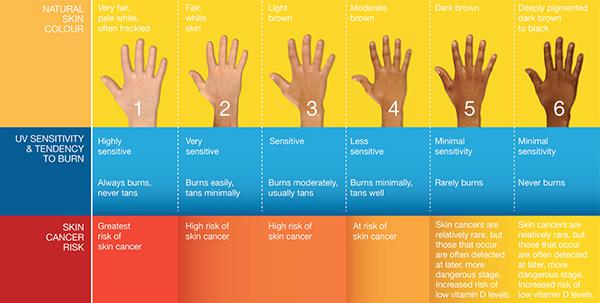
Here are the Sunscreen Facts:
1. Melanin Provides Some Protection, But It’s Not Enough
Melanin—the pigment responsible for skin color—does offer some natural sun protection. Darker skin tones have more melanin, which provides a built-in SPF of around 13. However, this isn’t sufficient to shield you from harmful UV rays. Even if you have richly pigmented skin, you’re still at risk.
2. Skin Cancer Doesn’t Discriminate
Skin cancer doesn’t care about your ethnicity. While fair-skinned individuals are more prone to certain types of skin cancer (like basal cell carcinoma), people of color can develop skin cancer too. Unfortunately, misconceptions about sunscreen often lead to delayed diagnoses in non-white populations.
- Choose the Right Sunscreen:
- Opt for broad-spectrum sunscreens that protect against both UVA and UVB rays.
- Look for products with an SPF of 30 or higher.
- Mineral sunscreens (containing zinc oxide or titanium dioxide) are a good option for people with sensitive skin.
- Apply Liberally:
- Don’t skimp on sunscreen. Apply enough to cover all exposed skin. The recommended does is 1/4 tsp for your face.
- Pay attention to commonly overlooked areas like the ears, neck, and back of the hands.
- Reapply Regularly:
- Sunscreen effectiveness diminishes over time. Reapply every two hours, especially if you’re swimming or sweating.
Remember, beautiful, healthy skin transcends ethnicity. Let’s debunk this myth together! We’ll talk more about sunscreens in more articles and upcoming videos.
Sunscreen Myths #3: Sunscreen is not needed Indoors
There is a common misconception that sunscreen is unnecessary when you’re indoors. Here’s the truth: The risk of sun exposure is lower when you’re indoors, but that does not mean that sunscreen is not required indoors.
Here are the Sunscreen Facts:
1. UV Rays Can Penetrate Windows
You might assume that being indoors shields you from UV radiation, but unfortunately, that’s not entirely accurate. Glass windows filter out UVB rays (the ones responsible for sunburn), but they allow UVA rays to pass through. Whether you’re working near a window, driving, or sitting by a sunlit desk, your skin is still exposed.
2. Blue Light and Skin Health
Beyond UV rays, there’s another indoor culprit: blue light. Our screens—phones, computers, and TVs—emit blue light, which can impact our skin. Research suggests that prolonged exposure to blue light may contribute to premature aging, hyperpigmentation, and oxidative stress.
- Wear Sunscreen Indoors:
- Yes, even indoors! Opt for a lightweight, non-greasy sunscreen.
- Look for “broad-spectrum” on the label to protect against both UVA and UVB.
- Consider mineral-based sunscreens—they’re effective and won’t clog pores.
- Screen Protection:
- Reduce blue light exposure by adjusting screen settings (like Night Mode).
- Take screen breaks to give your skin a breather.
Moral of the story “it ain’t safe”, not even in the comfort of your home. My advice: if you’re not a vampire and enjoys the light of the sun at home on the daily and you want to protect yourself from the sun… WEAR SUNSCREEN! Remember, your skin deserves care whether you’re basking in sunlight or typing away at your desk.
Sunscreen Myths #4: Sunscreen is not needed on a cloudy day
Here are the Sunscreen Facts:
1. UV Rays Are Sneaky Opportunists
Clouds might seem like nature’s sunshades, but they’re not foolproof. Up to 80% of UV radiation can penetrate cloud cover. Even when the sun plays hide-and-seek, those sneaky UVA and UVB rays are still at play. They’re like the uninvited guests at a picnic—persistent and unwelcome.
2. Cumulative Exposure Adds Up
Sure, one cloudy day won’t turn you into a raisin, but skin damage accumulates over time. Think of it as a savings account you didn’t sign up for—the interest compounds, and suddenly, you’re paying a hefty price. The more unprotected moments you accumulate, the greater the risk of premature aging, sunspots, and skin cancer.
- Cloudy ≠ Safe: Apply sunscreen even when the sky resembles a cozy quilt. Your skin deserves protection, rain or shine.
- Water-Resistant Formulas: If you’re out and about, opt for water-resistant sunscreens. Raindrops won’t wash away your shield.
- Reapply, Reapply, Reapply: Remember, sunscreen isn’t a one-time deal. Reapply every two hours, especially if you’re dancing in puddles or chasing rainbows.
Don’t be fooled; those clouds aren’t your skin’s saviors and won’t save you from the sun’s wrath! So, please wear your sunscreen daily, your skin needs protection from the sun on a cloudy day too.
Sunscreen Myths #5: Sunscreen Protects from 100% UV Rays
Let’s look at the myth that sunscreen provides an impenetrable shield against all UV rays. While sunscreen is a powerful ally, it’s essential to understand its limitations.
Here are the Sunscreen Facts:
1. SPF Explained
Sun Protection Factor (SPF) measures a sunscreen’s ability to block UVB rays—the ones responsible for sunburn. No sunscreen is capable of 100% UV protection, but what’s available on the market comes pretty darn close.
SPF 100 protects against 99 % of UVB rays, SPF 50 protects against 98 % and SPF 30 protects against 97% of UVB rays. As you can see no sunscreen can completely block all UVB rays and a high SPF number is not indicative of much higher protection. If your skin can tolerate SPF 100 then go for it, but my skin breaks out at the sign of anything over SPF50, so Yo girl has restrictions.
Here’s the kick though, SPFs do not provide UVA protection. Thus, when selecting a sunscreen ensure that the label states “ broad spectrum” to ensure you’re also receiving protection from UVA rays.
2. Broad-Spectrum Coverage
Effective sun protection involves more than just SPF. Enter broad-spectrum sunscreens—they guard against both UVA and UVB rays. UVA rays penetrate deeper into the skin, causing premature aging and contributing to skin cancer risk. A broad-spectrum sunscreen ensures comprehensive defense.
- Choose Wisely:
- Opt for a sunscreen with SPF 30 or higher.
- Look for the “broad-spectrum” label.
- Reapply every two hours, especially during prolonged sun exposure.
- Sunscreen Plus Sun-Smart Habits:
- Sunscreen complements other protective measures—hats, sunglasses, and seeking shade.
- Remember, no sunscreen is invincible; it’s a vital part of your sun safety toolkit.
Understanding sunscreen’s strengths and limitations empowers you to make informed choices when looking for a sunscreen.
Video on The Truth About Sunscreens
Conclusion
Sunscreen is one of the most effective invention available to help prevent sun damage. Addressing the misconceptions surrounding the use of sunscreens is key to aiding this and future generations with combating sun damage, hyperpigmentation, and sun damage. Coming from the Caribbean I never understood the need for sunscreen and now I do. I’m glad I do now, because it has helped me build a skin regimen that not only encourages healthy skin, but possibly also help combat skin skin cancers.
I hope this article was helpful for you. More importantly I hope it helped shine some light on sunscreen myths that you may have had. Do you have any sunscreen myths that you’ve held on to? Let me know in the comments below. I would love to hear from you. Have A Happy Sunscreen Summer!
